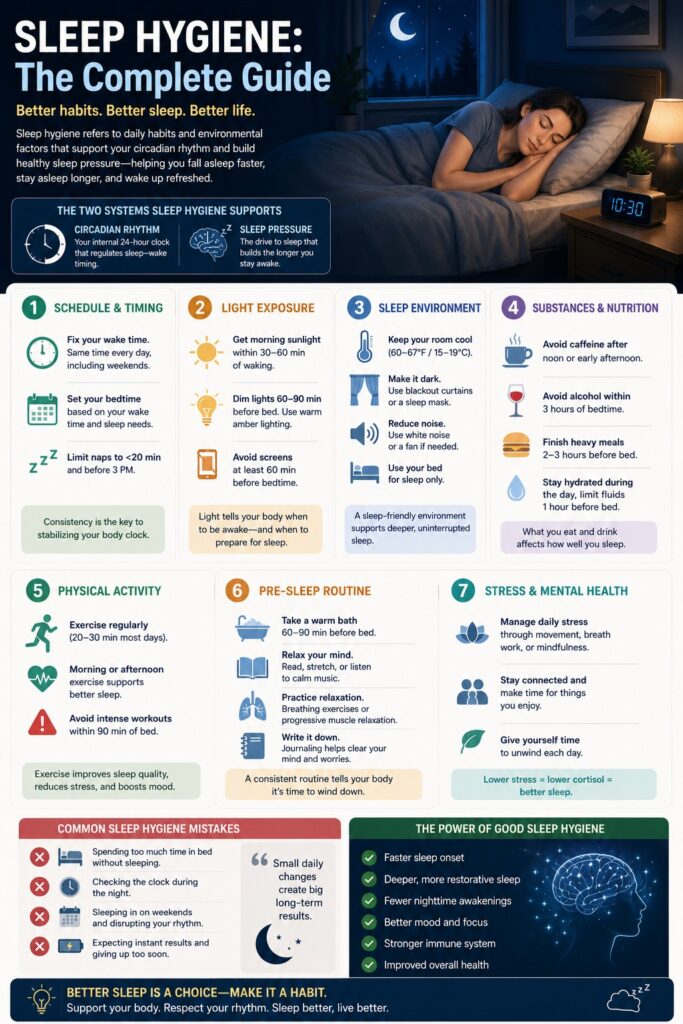
Sleep Hygiene: The Complete Guide
Introduction
Sleep hygiene is one of the most frequently referenced concepts in sleep health — and one of the most frequently misunderstood.
The term is often used as shorthand for a loose collection of bedtime tips:
- avoid caffeine
- put your phone down
- keep a consistent schedule
While these recommendations are valid, they represent only a fraction of what comprehensive sleep hygiene actually includes.
Sleep hygiene refers to the complete set of behavioral, environmental, and lifestyle practices that support the biological systems governing sleep quality.
It is not a single habit.
It is an ongoing relationship between your daily choices and the two primary biological systems that determine how well you sleep:
- circadian rhythm
- sleep pressure
Understanding how these systems work transforms sleep hygiene from a vague concept into a practical framework for improving sleep quality naturally.
The Two Systems Sleep Hygiene Supports
Circadian Rhythm
The circadian rhythm is the body’s internal 24-hour biological clock.
It regulates:
- melatonin release
- cortisol timing
- core body temperature
- sleepiness
- alertness
This system is heavily influenced by:
- light exposure
- behavioral consistency
- sleep timing
When circadian rhythm becomes unstable, sleep often becomes fragmented or delayed.
Sleep Pressure
Sleep pressure is the biological drive for sleep that builds throughout the day.
Adenosine gradually accumulates while awake and increases the urge to sleep at night.
Sleep pressure strengthens through:
- wakefulness
- physical activity
- consistent schedules
It weakens through:
- excessive napping
- irregular sleep timing
- too much time spent in bed
Healthy sleep hygiene supports both systems simultaneously.
Schedule and Timing
Fix Your Wake Time First
The most important sleep hygiene habit is maintaining a consistent wake time every day.
Wake time anchors the circadian rhythm and stabilizes:
- melatonin timing
- cortisol rhythm
- sleep pressure accumulation
Even weekends should remain consistent whenever possible.
Set Your Bedtime Based on Your Wake Time
Work backward from your desired wake time to create a realistic bedtime.
Most adults require:
7–9 hours of sleep
Go to bed when genuinely sleepy rather than simply exhausted.
Manage Naps Carefully
Long or late naps reduce nighttime sleep pressure.
If naps are necessary:
- keep them under 20 minutes
- avoid napping after 3 PM
Light Exposure Management
Morning Light Exposure
Morning sunlight is one of the strongest regulators of circadian rhythm timing.
Exposure within:
30–60 minutes after waking
helps:
- increase alertness
- suppress melatonin
- stabilize evening sleepiness
Even 10–15 minutes outdoors helps significantly.
Reduce Evening Light
Bright light at night suppresses melatonin production.
Helpful habits include:
- dim lighting
- warm-colored lamps
- avoiding overhead bright lights
The brain interprets bright cool light as daytime.
Eliminate Screens Before Bed
Phones, tablets, and televisions create two major problems:
- blue light exposure
- mental overstimulation
Avoid screens at least:
60–90 minutes before bed
for best results.
The Sleep Environment
Keep the Bedroom Cool
Most people sleep best between:
60–67°F (15–19°C)
Cool environments support deep sleep and nighttime thermal regulation.
Keep the Bedroom Dark
Even small amounts of light can fragment sleep architecture.
Helpful tools include:
- blackout curtains
- sleep masks
- covering electronic lights
Reduce Noise
Noise increases nighttime micro-awakenings and stress activation.
Helpful solutions:
- white noise
- pink noise
- fans
- earplugs
Use the Bed Only for Sleep
Avoid using the bed for:
- work
- TV
- eating
- scrolling on your phone
The brain should strongly associate the bed with sleep and relaxation.
Substances and Nutrition
Limit Afternoon Caffeine
Caffeine remains active for many hours.
Even afternoon caffeine can reduce:
- deep sleep
- sleep quality
- recovery
Many people benefit from stopping caffeine by:
early afternoon
Avoid Alcohol Before Bed
Alcohol may increase sleepiness initially but worsens:
- REM sleep
- sleep fragmentation
- early awakenings
Avoid alcohol within:
3 hours of bedtime
when possible.
Avoid Heavy Late-Night Meals
Large meals before bed increase:
- digestion activity
- core body temperature
- nighttime discomfort
Finish dinner:
2–3 hours before sleep
for better sleep quality.
Manage Evening Hydration
Stay hydrated during the day but reduce excessive fluid intake immediately before bed.
This helps reduce nighttime awakenings for urination.
Physical Activity
Exercise Regularly
Moderate exercise improves:
- deep sleep
- stress regulation
- sleep onset
- circadian rhythm stability
Even:
20–30 minutes most days
produces measurable sleep benefits.
Best Exercise Timing
Morning and afternoon workouts generally support sleep best.
Very intense workouts close to bedtime may temporarily increase alertness in sensitive individuals.
Pre-Sleep Routine
Build a Consistent Wind-Down Routine
The brain responds strongly to repeated behavioral patterns.
Consistent nighttime routines help condition the nervous system for sleep.
Helpful Pre-Sleep Activities
Useful wind-down habits include:
- reading
- stretching
- warm showers
- journaling
- breathing exercises
- meditation
Consistency matters more than complexity.
Warm Showers and Sleep
Warm showers or baths:
60–90 minutes before bed
help accelerate nighttime body cooling afterward, supporting sleep onset.
Stress and Mental Health
Chronic Stress Disrupts Sleep
Stress hormones such as cortisol directly interfere with:
- deep sleep
- REM sleep
- sleep onset
- nervous system recovery
Managing stress during the day improves sleep at night.
Helpful Stress Reduction Practices
Helpful tools include:
- exercise
- mindfulness
- journaling
- breathing exercises
- social connection
- reducing overstimulation
Sleep improves when the nervous system feels safe enough to relax.
Common Sleep Hygiene Mistakes
Spending Too Much Time in Bed
Lying awake in bed weakens the association between bed and sleep.
Clock Watching
Checking the time during the night increases stress and alertness.
Sleeping In on Weekends
Large weekend schedule shifts destabilize circadian rhythm timing.
Expecting Instant Results
Sleep hygiene improvements usually require:
2–4 weeks
of consistency before full benefits appear.
Conclusion
Sleep hygiene is not a simple checklist.
It is a complete framework for supporting the biological systems responsible for sleep quality.
Every habit either supports or disrupts:
- circadian rhythm
- sleep pressure
- nervous system recovery
The most effective sleep improvements usually come from consistent small habits repeated daily rather than extreme short-term solutions.
Fix your wake time.
Manage light exposure.
Optimize your bedroom.
Reduce overstimulation.
Build a calming nightly routine.
Over time, these practices compound into deeper, more restorative, and more reliable sleep.
Better sleep is not something you purchase instantly.
It is something you build — one consistent habit at a time.