Introduction
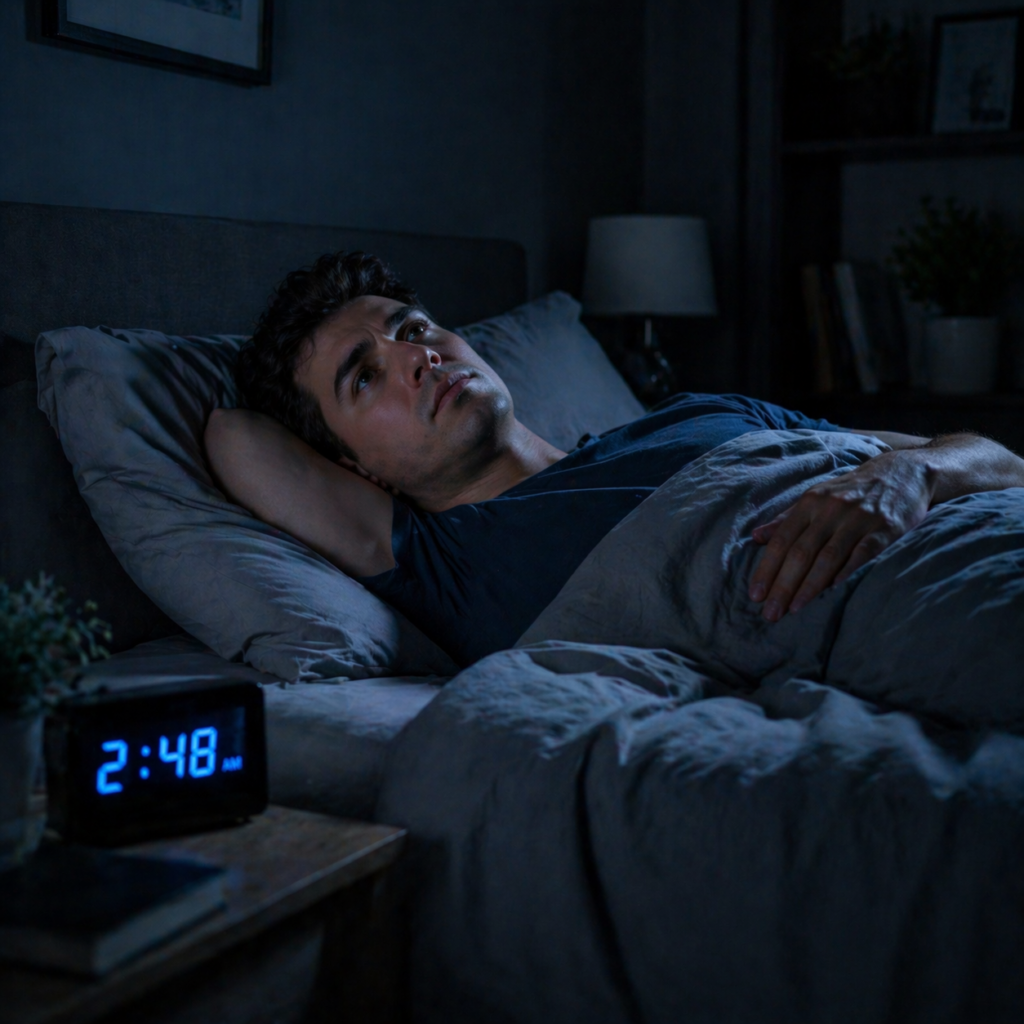
There are few things more frustrating than lying in bed completely exhausted and still being unable to fall asleep. Your body feels tired, your eyes are heavy, but your mind seems to be fully awake.
This experience is extremely common, yet many people misunderstand why it happens. The problem is not always a lack of sleep. In many cases, it is a mismatch between your body’s internal systems and your daily habits.
Understanding what prevents sleep — even when you feel tired — is the key to fixing it.
Tired vs Sleepy: The Critical Difference
One of the biggest misconceptions about sleep is that being tired automatically means you are ready to sleep.
Tiredness is physical or mental fatigue. Sleepiness, however, is a biological signal that your body is ready for sleep.
You can feel exhausted but not sleepy. This happens when your circadian rhythm is out of sync or your nervous system is still active.
Recognizing this difference helps explain why sleep does not come easily.
Your Circadian Rhythm Is Out of Sync
Your body runs on a 24-hour internal clock known as the circadian rhythm.
This system determines when you feel alert and when you feel sleepy. It is heavily influenced by light exposure and daily habits.
If your schedule is irregular, your body may not be ready for sleep when you go to bed.
This leads to lying awake even when you are tired.
Keeping a consistent sleep schedule helps align your internal clock.
Overactive Mind and Mental Stimulation
One of the most common reasons for difficulty falling asleep is an overactive mind.
When you lie down, your brain may start thinking about work, problems, or plans for the next day.
This keeps your brain in an alert state, preventing the transition into sleep.
Even using your phone before bed can keep your brain stimulated.
Reducing mental activity before bed can make a significant difference.
Stress and Cortisol Levels
Stress triggers the release of cortisol, a hormone that keeps your body alert.
High cortisol levels at night make it difficult to relax and fall asleep.
Even if you are physically tired, your body remains in a state of alertness.
This is why stress is one of the leading causes of sleep problems.
Learning how to relax before bed can help reduce this effect.
Screen Exposure Before Bed
Electronic devices emit blue light, which signals to your brain that it is still daytime.
This suppresses melatonin, the hormone responsible for sleep.
Even short periods of screen use before bed can delay sleep onset.
In addition to light, the content you consume also stimulates your brain.
Avoiding screens before bed can improve your ability to fall asleep.
Irregular Daily Habits
Your daily habits affect your sleep more than you might think.
Caffeine consumption, lack of physical activity, and irregular meal timing can all interfere with sleep.
Caffeine can stay in your system for several hours, reducing sleep quality.
A lack of movement can reduce sleep pressure, making it harder to feel sleepy at night.
Small adjustments to your daily routine can help improve sleep.
Trying Too Hard to Sleep
Ironically, trying to force yourself to sleep can make the problem worse.
When you focus too much on falling asleep, you create tension and frustration.
This activates your brain and keeps you awake.
Sleep works best when you allow it to happen naturally.
Creating the right conditions is more effective than forcing sleep.
What You Can Do Tonight
You do not need to change everything at once.
Start with simple changes such as maintaining a consistent wake-up time, reducing screen use before bed, and creating a calm environment.
Focus on relaxing your mind rather than forcing sleep.
Even small improvements can make a noticeable difference.
Conclusion
Not being able to fall asleep when you are exhausted is not unusual.
It is often caused by a combination of biological and lifestyle factors.
By understanding these factors and making simple adjustments, you can improve your ability to fall asleep and get better rest.
Better sleep starts with working with your body, not against it.