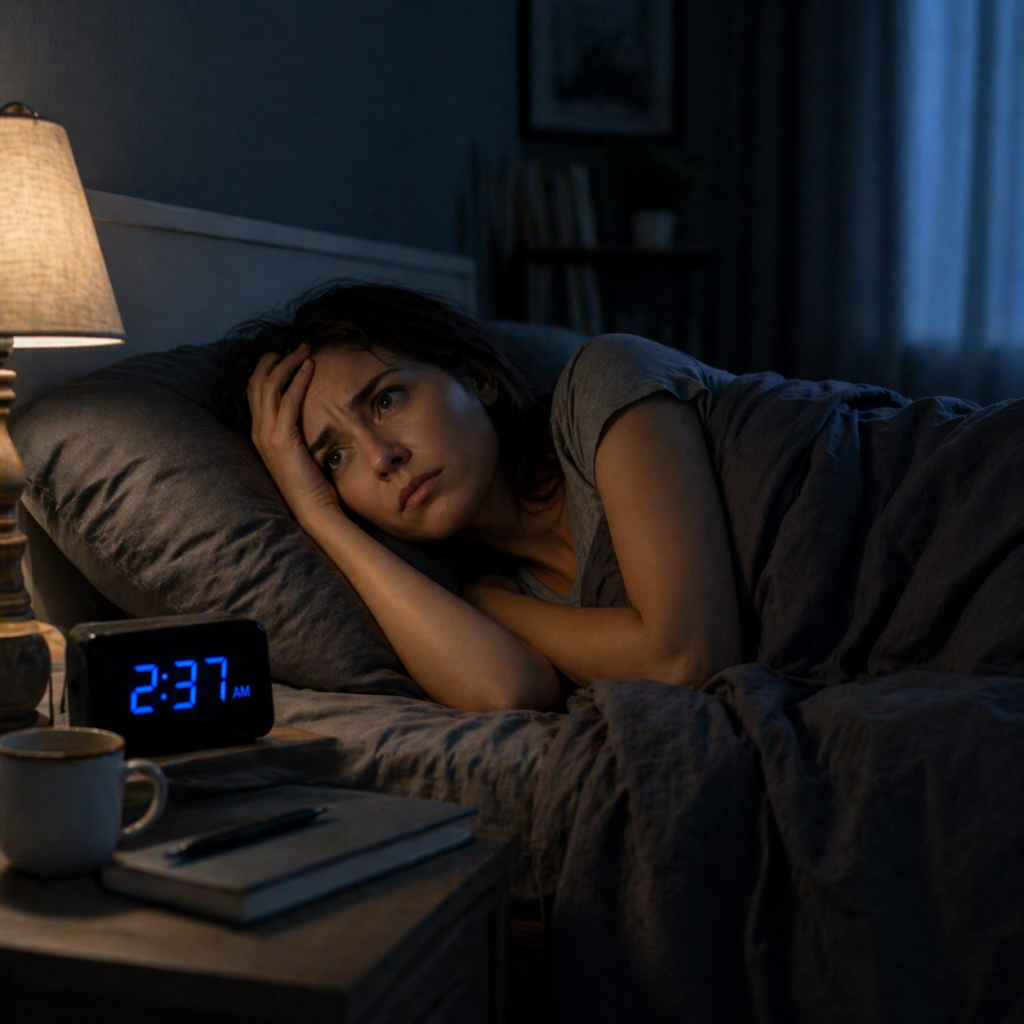
Top 7 Reasons You Can’t Fall Asleep (And How to Fix Them)
Introduction
Lying in bed with your eyes closed, waiting for sleep that never seems to come — it is one of the most frustrating experiences a person can have. Your body is exhausted. The room is dark. Everything should be in place. And yet your mind keeps running, your body stays tense, and the minutes keep passing.
If this is a regular experience for you, the problem is almost certainly not that something is seriously wrong. Difficulty falling asleep is one of the most common health complaints among adults worldwide, and in the vast majority of cases, it has identifiable causes — causes that respond well to targeted, consistent changes.
The key is understanding which specific factors are driving the problem. Sleep does not fail randomly. It fails for reasons. This article breaks down the seven most common reasons people cannot fall asleep, explains the biology behind each one, and gives you clear, actionable steps to fix them.
1. Irregular Sleep Schedule
Your body operates on a 24-hour internal clock called the circadian rhythm, regulated by a small region of the brain called the suprachiasmatic nucleus. This system controls the timing of dozens of biological processes — including when melatonin is released, when core body temperature drops, and when you naturally feel sleepy.
This clock runs on consistency. When you go to bed and wake up at the same time every day, your circadian rhythm stabilizes. Your body begins preparing for sleep before you even get into bed — releasing melatonin, lowering temperature, and shifting your nervous system toward its rest state. Falling asleep becomes easier because your biology is already moving in that direction.
When your schedule is irregular — different bedtimes each night, sleeping in on weekends, or staying up significantly later than usual — your circadian rhythm loses its anchor. It cannot predict when sleep is coming, so it cannot prepare. The result is lying in bed wide awake even when you feel physically exhausted, because your biological sleep window has not arrived.
Research has shown that even modest schedule irregularities — as little as 90 minutes of variation between weekdays and weekends — are associated with significantly worse sleep onset and greater daytime fatigue. This is sometimes called social jet lag, and its effects closely resemble those of traveling across time zones.
How to fix it: Set a consistent wake-up time and hold it every day, including weekends. This is more important than your bedtime. A fixed wake time anchors your circadian rhythm and builds reliable sleep pressure throughout the day, making it progressively easier to fall asleep at your intended hour.
2. Too Much Screen Time Before Bed
Electronic screens disrupt sleep onset in two distinct and compounding ways. The first is blue light. Screens emit short-wavelength blue light that suppresses melatonin production by signaling to the brain’s master clock that it is still daytime. This can delay the biological onset of sleepiness by one to two hours, even when you feel physically tired.
The second problem is cognitive stimulation. Social media, news, videos, and messaging apps are specifically engineered to capture and hold attention. They trigger dopamine responses that keep the brain in an active, reward-seeking state — the neurological opposite of the calm disengagement that sleep requires. Blue light filters and night modes reduce the light problem but do nothing about the stimulation problem. Your brain is still engaged, still processing, still alert.
How to fix it: Put screens away at least 60 minutes before your intended bedtime. Replace that time with genuinely low-stimulation activities — reading a physical book, light stretching, journaling, or calm music. The goal is to allow your brain the time it needs to disengage gradually before sleep.
3. Stress and Overthinking
Stress is consistently ranked among the leading causes of sleep onset difficulty, and the mechanism is direct. When you are stressed, your body produces elevated cortisol — the hormone that promotes alertness and physical readiness. Cortisol and sleep are biologically incompatible. Elevated cortisol at bedtime suppresses melatonin, delays sleep onset, and keeps the nervous system locked in its sympathetic alert state.
Overthinking produces the same effect. Replaying conversations, rehearsing tomorrow’s challenges, or cycling through unresolved worries activates the brain’s problem-solving centers and maintains cortisol elevation — even without acute stress. You can feel physically exhausted and mentally wide awake simultaneously, because tiredness and sleepiness are not the same thing.
How to fix it: Practice a pre-sleep brain dump — spend five to ten minutes writing down your worries, unresolved thoughts, or tomorrow’s tasks before bed. Research from Baylor University found that people who wrote a specific to-do list before bed fell asleep significantly faster, because the act of writing signals to the brain that these items have been acknowledged and set aside. Slow diaphragmatic breathing — inhale for 4 seconds, hold for 7, exhale for 8 — activates the vagus nerve and shifts the nervous system toward its rest state within minutes.
4. Poor Sleep Environment
Your brain continues monitoring your surroundings throughout the night, even during sleep. Light, temperature, and noise all send continuous signals to your brain that influence how deeply it cycles through sleep stages. An environment that is too bright, too warm, or too noisy keeps your brain in lighter, more vigilant stages of sleep — reducing the time spent in the deep slow-wave and REM sleep that determine how rested you feel.
Temperature is the most underestimated factor. Your body must lower its core temperature to initiate and sustain deep sleep. A bedroom that is too warm prevents this process. Most sleep researchers recommend keeping the bedroom between 60 and 67 degrees Fahrenheit, or 15 to 19 degrees Celsius.
Even small amounts of light — from streetlights through curtains, standby indicators on electronics, or charging cables — suppress melatonin and increase nighttime micro-arousals. Sudden noise triggers brief cortisol spikes that pull the brain out of deep sleep, even without fully waking you.
How to fix it: Use blackout curtains or a sleep mask to eliminate light. Keep your bedroom cool and well-ventilated. Use a fan or white noise machine to mask unpredictable sounds. Reserve your bed for sleep only — working or watching content in bed weakens the mental association between your bedroom and rest, making it harder to fall asleep.
5. Caffeine and Late-Night Eating
Caffeine works by blocking adenosine receptors in the brain — effectively masking your natural sleep pressure without reducing it. With a half-life of five to six hours, a coffee consumed at 3 PM still has significant activity in your system at 9 PM. Beyond delaying sleep onset, afternoon caffeine reduces the proportion of deep slow-wave sleep even in people who fall asleep without apparent difficulty. Many people experience this as waking up unrested without understanding the connection.
Late-night eating raises core body temperature and digestive activity at precisely the time your body needs to be cooling down. A heavy meal within two hours of bedtime is associated with longer sleep onset and more fragmented overnight sleep.
How to fix it: Cut off caffeine by early to mid afternoon. If you are particularly sensitive to caffeine, noon may be a safer cutoff during periods when sleep is difficult. Finish dinner at least two to three hours before bedtime. If you need a late snack, keep it small and low in sugar.
6. Lack of Physical Activity
Regular physical activity is one of the most well-supported interventions for improving sleep quality and reducing the time it takes to fall asleep. Exercise increases slow-wave deep sleep, reduces cortisol over time, and builds adenosine — the chemical that drives sleep pressure — more effectively throughout the day.
Without adequate movement, sleep pressure builds more slowly, and you may reach bedtime without feeling genuinely sleepy. A sedentary lifestyle is consistently associated with longer sleep onset times and reduced sleep depth.
How to fix it: Aim for at least 20 to 30 minutes of moderate exercise most days of the week. Morning or afternoon exercise tends to have the most positive impact on nighttime sleep. Even a brisk walk after dinner has been shown to improve sleep quality. Avoid vigorous exercise within two to three hours of bedtime, as it can temporarily raise cortisol and core temperature in people sensitive to post-exercise stimulation.
7. Trying Too Hard to Sleep
This is perhaps the most underappreciated cause of sleep onset difficulty. When you lie in bed frustrated about not sleeping — watching the minutes pass, calculating how many hours of sleep you will get if you fall asleep right now — your brain registers the bed as a place of stress and failure. Over time, this creates a conditioned arousal response: your body becomes more alert when you get into bed, not less.
The harder you try to force sleep, the more cortisol rises, and the further away sleep becomes. This cycle is known as psychophysiological insomnia, and it is self-reinforcing without intervention.
How to fix it: If you have been lying awake for more than 20 minutes, get out of bed. Go to a dimly lit room and do something calm — reading, gentle stretching, or quiet sitting — until you feel genuinely sleepy, then return to bed. This breaks the association between bed and wakefulness. Avoid checking the time repeatedly. Turn your clock away from view, or place your phone across the room. Shifting your goal from “falling asleep” to “resting quietly” removes the performance pressure that perpetuates the cycle.
What to Expect When You Make These Changes
Sleep improvements do not happen overnight, but they do happen consistently with sustained effort. Most people notice meaningful changes within seven to fourteen days of addressing the primary causes affecting their sleep. The timeline depends on how long the disruption has been present and how consistently the new habits are applied.
Start with the one or two factors that seem most relevant to your situation. A consistent wake time and screen-free evenings are the highest-leverage starting points for most people. Build from there gradually rather than attempting every change simultaneously.
Setbacks are normal and do not erase your progress. One late night or one stressful evening does not reset everything. Return to your habits the following morning and continue.
Conclusion
Difficulty falling asleep is almost never random. It is the result of specific, identifiable factors — biological, environmental, and behavioral — that are working against your body’s natural sleep system.
Understanding which of these seven factors applies to your situation is the first step. Addressing them consistently, one at a time, is how lasting improvement happens. Your body already knows how to fall asleep. The goal is simply to remove the obstacles that are getting in the way.
Better nights are built from better days — and they start with understanding why sleep is failing in the first place.