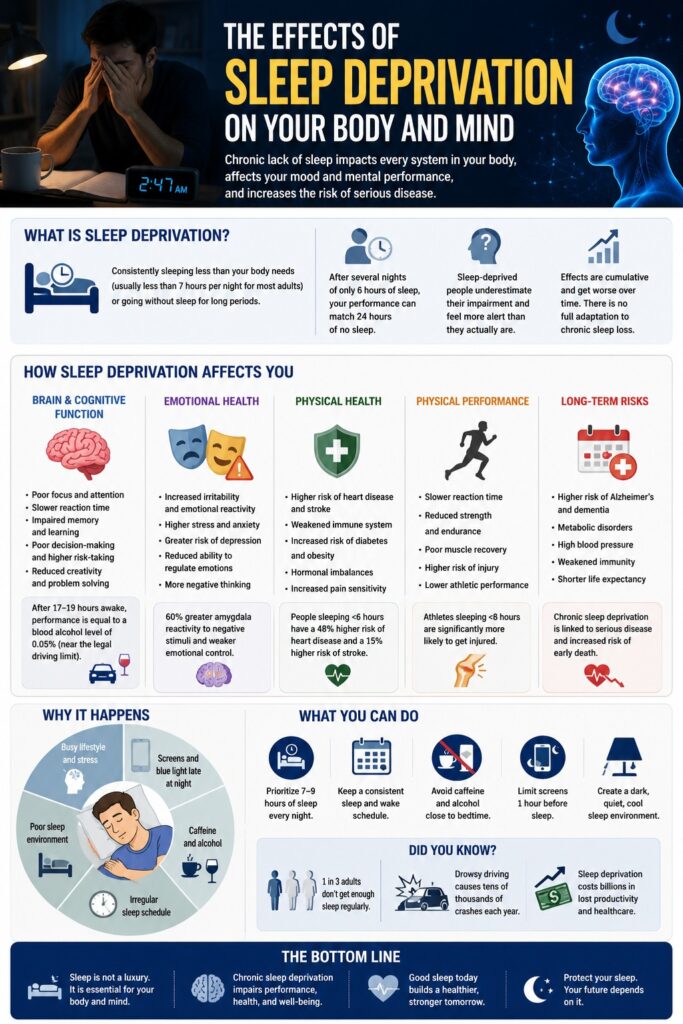
The Effects of Sleep Deprivation on Your Body and Mind
Introduction
Sleep deprivation is one of the most common health problems in modern life. Many people treat lack of sleep as normal, but chronic sleep deprivation affects nearly every system in the body and brain.
Sleeping too little does not only make you tired. It reduces focus, weakens emotional control, damages physical health, and increases the risk of serious disease over time.
Understanding how sleep deprivation affects the body and mind is essential for protecting long-term health and performance.
What Is Sleep Deprivation?
Sleep deprivation occurs when you consistently get less sleep than your body needs.
For most adults, this means regularly sleeping fewer than seven hours per night.
Some people experience total sleep deprivation by staying awake for long periods, while others experience chronic mild deprivation by sleeping too little every night.
Both forms negatively affect health and performance.
Effects on the Brain and Cognitive Function
The brain is one of the first organs affected by sleep loss.
Attention and concentration decline quickly when sleep is insufficient.
Reaction time slows, memory becomes weaker, and decision-making becomes less accurate.
Even one night of poor sleep can reduce cognitive performance significantly.
After long periods awake, performance impairment can become comparable to alcohol intoxication.
Sleep deprivation also increases impulsive behavior and poor judgment.
Effects on Emotional Health
Sleep plays a major role in emotional regulation.
Poor sleep increases emotional reactivity, irritability, and stress sensitivity.
The brain’s emotional centers become more active while the areas responsible for rational control become weaker.
This makes it harder to manage emotions and cope with stress.
Sleep deprivation is also strongly linked to anxiety and depression.
Chronic sleep problems increase the risk of developing mental health disorders over time.
Effects on Physical Health
The physical effects of sleep deprivation are extensive.
Lack of sleep increases the risk of:
- Heart disease
- High blood pressure
- Stroke
- Obesity
- Type 2 diabetes
Sleep also supports immune function.
People who consistently sleep too little are more likely to get sick because their immune system becomes weaker.
Hormonal balance is also disrupted.
Cortisol increases while important recovery hormones decrease.
Effects on Weight and Metabolism
Sleep deprivation affects appetite and metabolism.
The hunger hormone ghrelin increases, while the satiety hormone leptin decreases.
This creates stronger cravings for high-calorie foods and increases overall calorie intake.
Insulin sensitivity also decreases, making fat storage more likely.
Poor sleep is strongly associated with weight gain and metabolic problems.
Effects on Physical Performance
Physical performance declines significantly without adequate sleep.
Reaction time, endurance, strength, and coordination all worsen.
Recovery from exercise becomes slower because muscle repair primarily happens during deep sleep.
Athletes who sleep too little are more likely to experience injuries and reduced performance.
Long-Term Consequences
Chronic sleep deprivation may contribute to serious long-term health problems.
Research links long-term poor sleep with increased risk of Alzheimer’s disease and cognitive decline.
Sleep is important for clearing waste products from the brain during the night.
Without enough deep sleep, these waste products can accumulate over time.
Chronic sleep deprivation is also associated with shorter life expectancy.
Why Sleep Deprivation Is Dangerous
One of the most dangerous aspects of sleep deprivation is that people often underestimate how impaired they are.
As sleep debt accumulates, the brain becomes less accurate at recognizing fatigue and reduced performance.
This makes chronic sleep deprivation difficult to self-assess.
How to Improve Sleep
Several habits can improve sleep quality and reduce sleep deprivation:
- Maintain a consistent sleep schedule
- Avoid caffeine late in the day
- Reduce alcohol before bed
- Limit screen exposure at night
- Create a cool, dark, quiet sleep environment
- Prioritize at least seven hours of sleep
Small improvements in sleep habits can produce major improvements in health and energy.
Conclusion
Sleep deprivation affects every part of the body and mind.
It reduces cognitive performance, increases emotional instability, weakens physical health, and raises the risk of long-term disease.
Sleep is not wasted time. It is a biological necessity that supports every aspect of human function.
Protecting your sleep is one of the most important investments you can make in your health, performance, and future.