Sleep and Inflammation: The Hidden Connection Slowly Damaging Your Body (2026 Guide)
Introduction
Most people think of poor sleep as an energy problem.
You feel tired.
You drink more caffeine.
You push through the day feeling mentally foggy and physically drained.
But beneath the surface, something much deeper may be happening.
Your body may be becoming increasingly inflamed.
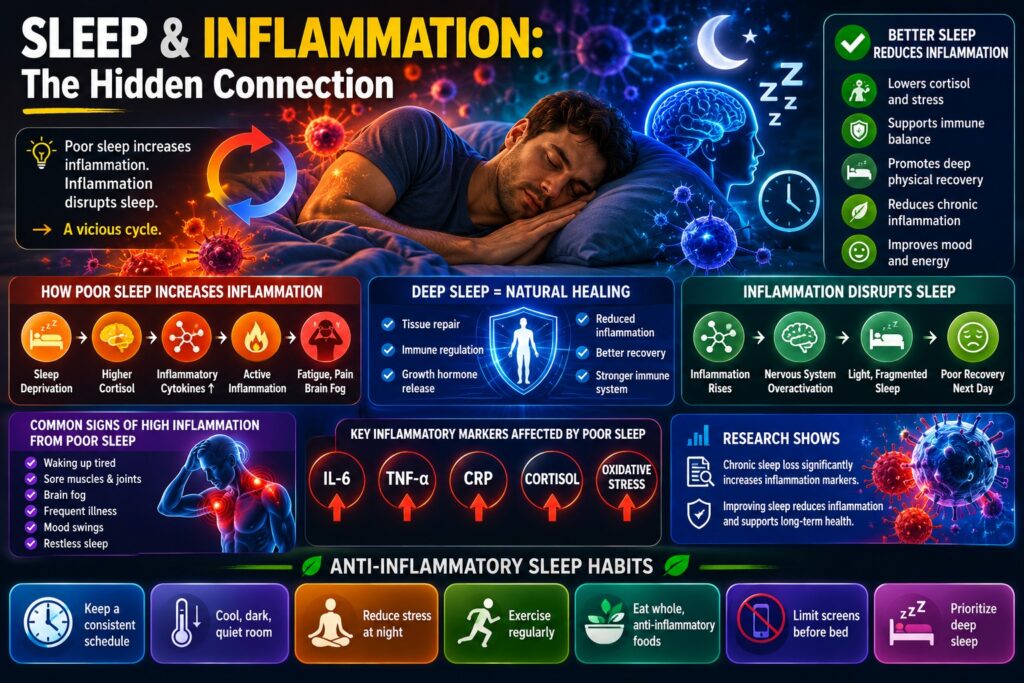
Modern research now shows that poor sleep and chronic inflammation are deeply interconnected biological processes that continuously reinforce one another. Sleep deprivation increases inflammation, and inflammation itself disrupts sleep quality, creating a cycle that gradually affects nearly every system in the body.
The consequences extend far beyond fatigue.
Chronic inflammation is associated with:
- cardiovascular disease
- diabetes
- obesity
- depression
- autoimmune dysfunction
- cognitive decline
- accelerated aging
And sleep is one of the most powerful regulators of inflammation available naturally.
Deep restorative sleep is not simply rest.
It is active biological repair.
During high-quality sleep, the immune system recalibrates, inflammatory activity becomes regulated, tissue recovery increases, and the nervous system shifts into restoration mode.
When sleep becomes chronically disrupted, the body slowly loses control of this recovery process.
This guide explains the science behind sleep and inflammation, how poor sleep silently increases inflammatory stress throughout the body, why inflammation itself disrupts sleep quality, and how improving sleep may help reduce long-term systemic stress and disease risk.
What Is Inflammation?
Inflammation is the body’s natural protective response to injury, infection, or threat.
In the short term, inflammation is helpful.
It helps:
- fight infection
- repair tissue
- activate immune defenses
- support healing
This is known as acute inflammation.
The problem develops when inflammation becomes chronic.
Chronic low-grade inflammation is a prolonged state of immune activation where the body remains partially stressed even without immediate danger present.
Unlike acute inflammation, chronic inflammation is subtle and often invisible.
People may not notice it directly.
But over time it contributes to:
- fatigue
- pain
- brain fog
- poor recovery
- metabolic dysfunction
- accelerated aging
Sleep plays a major role in regulating this inflammatory balance.
How Poor Sleep Increases Inflammation
Sleep deprivation activates multiple stress and immune pathways associated with inflammation.
Even relatively short periods of poor sleep can increase inflammatory markers significantly.
Research consistently shows that insufficient sleep increases:
- cortisol
- sympathetic nervous system activation
- inflammatory cytokines
- oxidative stress
The body essentially begins behaving as though it is under continuous physiological threat.
Inflammatory Cytokines and Sleep
Cytokines are signaling proteins used by the immune system.
Some cytokines promote inflammation.
Others help regulate immune balance.
Poor sleep increases pro-inflammatory cytokines such as:
- IL-6
- TNF-alpha
- CRP-related inflammatory activity
Elevated inflammatory cytokines are associated with:
- fatigue
- depression
- chronic pain
- cardiovascular disease
- metabolic dysfunction
Interestingly, these same cytokines also influence sleep itself.
When inflammatory activity rises too high, sleep quality often worsens.
This creates a self-reinforcing cycle.
Sleep Deprivation as Biological Stress
The body interprets sleep deprivation as a survival threat.
From an evolutionary perspective, prolonged wakefulness often signaled danger, instability, or environmental threat.
As a result, the body responds by activating stress systems.
Heart rate increases.
Cortisol rises.
Sympathetic nervous system activity remains elevated.
Inflammatory signaling increases.
This is helpful temporarily during emergencies.
It becomes damaging when chronic.
Modern lifestyles often create exactly this condition:
- chronic stress
- insufficient sleep
- constant stimulation
- irregular schedules
- poor recovery
The nervous system never fully resets.
Deep Sleep and Physical Recovery
Deep sleep is the most physically restorative stage of sleep.
This is when:
- tissue repair accelerates
- immune regulation improves
- growth hormone releases
- inflammation decreases
- nervous system recovery occurs
People who consistently miss deep sleep often experience:
- poor physical recovery
- increased soreness
- fatigue
- slower healing
- elevated stress sensitivity
Deep sleep acts like overnight maintenance for the body.
Without enough of it, systemic strain gradually accumulates.
How Inflammation Disrupts Sleep
The relationship works both ways.
Inflammation itself also damages sleep quality.
People experiencing chronic inflammation often report:
- fragmented sleep
- light sleep
- nighttime awakenings
- overheating
- fatigue despite sleeping
- restless sleep
Inflammatory activation keeps the nervous system partially alert.
The body struggles to fully enter restorative parasympathetic recovery states.
This is one reason chronic pain conditions are so strongly associated with insomnia and poor sleep quality.
Sleep and the Immune System
Sleep is essential for immune system coordination.
During sleep, the immune system performs critical regulatory functions involving:
- infection defense
- inflammatory control
- immune memory
- tissue repair
Sleep deprivation weakens these processes.
Research shows poor sleep may reduce immune resilience and increase susceptibility to illness.
People sleeping poorly often notice:
- frequent colds
- slower recovery
- prolonged fatigue after illness
The immune system functions best when recovery is consistent.
Stress, Cortisol, and Inflammation
Stress is one of the strongest amplifiers of inflammation.
Chronic cortisol dysregulation increases:
- inflammatory signaling
- nervous system activation
- poor sleep quality
This creates a destructive triangle:
- stress worsens sleep
- poor sleep increases inflammation
- inflammation increases stress sensitivity
Over time, the body becomes trapped in chronic physiological overload.
Many people normalize this state because it develops gradually.
Sleep and Metabolic Inflammation
Poor sleep also affects metabolism.
Sleep restriction is strongly associated with:
- insulin resistance
- increased hunger hormones
- weight gain
- elevated blood sugar
- abdominal fat accumulation
Excess visceral fat itself produces inflammatory chemicals.
This means chronic sleep deprivation may indirectly increase inflammation through metabolic dysfunction as well.
Why You Feel Physically Worse After Poor Sleep
Many people notice increased:
- soreness
- headaches
- stiffness
- sensitivity
- fatigue
after sleeping poorly.
Inflammatory activity is part of the reason.
Recovery becomes impaired.
The nervous system becomes more reactive.
Pain sensitivity often increases after insufficient sleep because inflammation and stress signaling remain elevated.
Anti-Inflammatory Sleep Habits
Maintain a Consistent Sleep Schedule
Circadian stability improves hormonal regulation and inflammatory balance.
Irregular sleep schedules increase physiological stress.
Prioritize Deep Sleep
Deep sleep supports:
- immune recovery
- tissue repair
- nervous system restoration
Helpful habits include:
- cooler bedrooms
- reduced evening light exposure
- regular exercise
- lower nighttime stress
Reduce Evening Stress
Chronic nighttime stress increases cortisol and inflammatory activity.
Helpful tools include:
- journaling
- meditation
- breathing exercises
- stretching
- reducing screen exposure
Exercise Regularly
Moderate consistent exercise reduces inflammation long term and improves sleep quality simultaneously.
The key is consistency rather than extreme intensity.
Improve Diet Quality
Highly processed diets may increase inflammatory burden.
Whole-food diets rich in:
- vegetables
- healthy fats
- fiber
- omega-3 fats
support both sleep and inflammatory regulation.
Avoid Chronic Sleep Restriction
One bad night matters less than repeated poor sleep over months and years.
Chronic sleep debt gradually accumulates physiological stress throughout the body.
Can Better Sleep Reduce Inflammation?
Research strongly suggests yes.
Improving sleep quality has been associated with reductions in inflammatory markers, improved stress regulation, and better metabolic health.
Sleep is not merely passive rest.
It is one of the body’s most powerful anti-inflammatory systems.
Conclusion
Sleep and inflammation are deeply connected biological systems that constantly influence one another.
Poor sleep increases inflammatory stress.
Inflammation disrupts sleep quality.
Over time, the cycle may quietly affect energy, recovery, mood, metabolism, immune function, and long-term health.
Deep restorative sleep is not optional maintenance.
It is active biological repair.
Modern life often encourages people to sacrifice sleep while ignoring the hidden physiological cost accumulating underneath.
But the body always keeps track.
And sometimes the most powerful anti-inflammatory intervention available is not another supplement, diet, or productivity strategy.
Sometimes it is simply deeper sleep.
📌 Tags
Sleep and Inflammation, Chronic Inflammation, Better Sleep, Sleep Science, Deep Sleep, Inflammation and Sleep, Sleep Recovery, Immune System and Sleep, Stress and Inflammation, Cortisol and Sleep, Sleep Health, Anti Inflammatory Habits, Deep Sleep Recovery, Healthy Sleep Habits, Sleep and Immune Function