The Science of Naps: How to Nap Without Ruining Your Sleep (2026 Guide)
Introduction
Naps have a strange reputation in modern culture.
Some people view them as laziness.
Others treat them like a productivity hack.
Meanwhile, millions of exhausted people unintentionally fall asleep during the afternoon because their body feels physically unable to stay alert any longer.
The reality is that napping is neither inherently good nor inherently harmful.
A properly timed nap can improve:
- alertness
- memory
- reaction time
- mood
- cognitive performance
- physical recovery
But poorly timed naps can also:
- disrupt nighttime sleep
- worsen insomnia
- increase sleep inertia
- shift circadian rhythm timing later
The difference depends on understanding sleep biology.
Humans are naturally designed to experience fluctuations in alertness throughout the day. The afternoon energy dip many people experience is not always laziness or lack of discipline. It is partially built into human circadian rhythm physiology.
The key is learning how to work with these rhythms rather than against them.
This guide explains the science of naps, why naps can feel either amazing or terrible, the best nap durations, how naps affect sleep pressure, and how to nap strategically without damaging nighttime sleep quality.
Why Humans Get Sleepy in the Afternoon
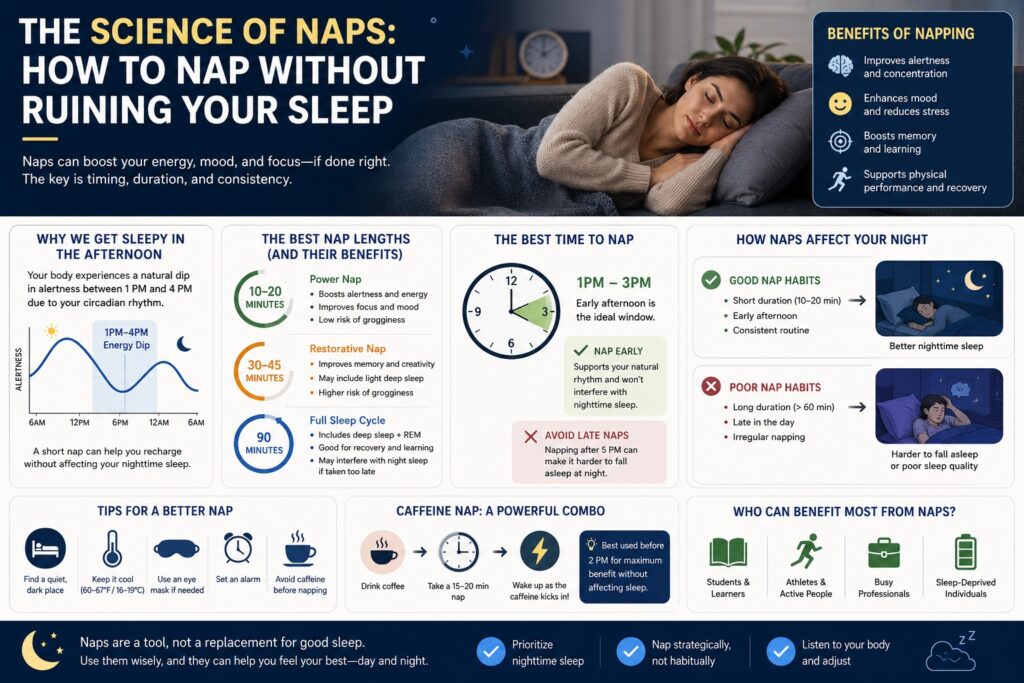
Many people experience a noticeable drop in energy between roughly 1 PM and 4 PM.
This occurs even in healthy individuals who slept adequately the night before.
The reason involves circadian rhythm timing.
Human alertness naturally rises during the morning, dips during the afternoon, and rises slightly again in the evening before declining toward nighttime sleep.
This afternoon dip is biologically normal.
In some cultures, daily rest periods evolved around this natural rhythm. Modern schedules often ignore it completely.
The effect becomes stronger when combined with:
- sleep deprivation
- heavy meals
- sedentary behavior
- poor nighttime sleep
- stress
- dehydration
The brain temporarily shifts toward lower alertness.
A short nap can partially reverse this decline.
What Happens During a Nap
Naps are not simply “light sleep.”
Depending on length, naps may include:
- light sleep
- deep sleep
- REM sleep
Different sleep stages produce different effects.
Short naps primarily improve alertness and reduce sleep pressure temporarily.
Longer naps may include deeper restorative sleep stages, but they also increase the risk of waking up groggy and disrupting nighttime sleep timing.
This is why nap duration matters so much.
The Power Nap: Why Short Naps Work Best
The classic “power nap” usually lasts between 10 and 20 minutes.
This duration is highly effective because it allows the brain to enter lighter sleep stages without progressing deeply into slow-wave sleep.
Benefits may include:
- improved focus
- faster reaction time
- increased energy
- better mood
- reduced mental fatigue
Importantly, short naps minimize sleep inertia.
Sleep inertia refers to the groggy, heavy, mentally foggy feeling that occurs when waking from deeper sleep stages.
Power naps work because they refresh alertness without fully pulling the brain into deep recovery mode.
For many people, this is the ideal daytime nap structure.
Why Long Naps Can Make You Feel Worse
Many people wake from long naps feeling disoriented, heavy, or strangely exhausted.
This happens because the brain entered deeper sleep stages before awakening.
Waking suddenly from slow-wave sleep disrupts brain transition processes and increases sleep inertia.
Symptoms may include:
- grogginess
- confusion
- low motivation
- headaches
- mental fog
- sluggishness
Long naps also reduce sleep pressure.
Sleep pressure is the biological drive for sleep that builds throughout the day.
Excessive daytime sleep reduces this pressure prematurely, making it harder to fall asleep naturally at night.
This becomes especially problematic for people already struggling with insomnia.
The Best Nap Lengths
10–20 Minute Nap
Best for:
- quick energy
- alertness
- work breaks
- mental recovery
Lowest risk of grogginess or nighttime sleep disruption.
30–45 Minute Nap
May improve creativity and memory but increases risk of sleep inertia.
Some people feel refreshed.
Others feel worse afterward.
90 Minute Nap
A full sleep cycle.
May include:
- light sleep
- deep sleep
- REM sleep
Potentially useful for:
- severe sleep deprivation
- athletes
- shift workers
- recovery periods
However, late 90-minute naps can significantly delay nighttime sleep.
The Ideal Time to Nap
Timing matters almost as much as duration.
The best nap window is usually:
- early afternoon
- roughly 1 PM to 3 PM
This aligns with the body’s natural circadian energy dip.
Late naps are more likely to interfere with nighttime sleep because they occur too close to bedtime and reduce accumulated sleep pressure.
For many people, naps after 5 PM significantly increase difficulty falling asleep later.
Naps and Sleep Deprivation
Naps can partially compensate for insufficient nighttime sleep.
But they are not a complete replacement for proper sleep.
Short-term sleep deprivation may improve temporarily after naps because naps restore some cognitive performance and alertness.
However, chronic sleep restriction still produces:
- hormonal disruption
- impaired recovery
- mood instability
- immune dysfunction
- reduced metabolic health
Naps are useful tools.
They are not substitutes for consistently healthy sleep.
Can Naps Improve Learning and Memory?
Yes.
Sleep plays a major role in memory consolidation.
Even short naps appear to improve:
- learning
- information retention
- skill acquisition
- creativity
Research consistently shows that sleep after learning helps stabilize memory formation.
This is one reason why naps may improve productivity rather than reduce it.
The brain uses sleep to organize and strengthen newly acquired information.
Why Some People Cannot Nap
Not everyone naps easily.
Several factors influence nap ability:
- genetics
- stress levels
- nervous system activation
- caffeine intake
- circadian rhythm timing
Highly stressed individuals often struggle to relax enough for daytime sleep.
Others naturally maintain stronger daytime alertness and simply do not feel sleepy during the day.
This is normal.
Napping is not biologically required for everyone.
Napping and Insomnia
People with insomnia must approach naps carefully.
Frequent or long naps can worsen nighttime sleep problems by reducing sleep pressure too much before bedtime.
For individuals struggling with chronic insomnia:
- avoid long naps
- avoid evening naps
- keep naps under 20 minutes if necessary
Sleep specialists often prioritize rebuilding nighttime sleep drive first.
The Best Environment for Napping
Effective naps usually occur in environments that are:
- cool
- quiet
- dark
- comfortable
However, daytime naps do not require perfect sleep conditions.
Even brief periods of closed-eye rest in calm environments may improve mental recovery.
Some people also benefit from:
- eye masks
- white noise
- short relaxation audio
- breathing exercises before naps
Caffeine Naps: Do They Work?
Surprisingly, yes.
A “caffeine nap” involves drinking caffeine immediately before a short 15–20 minute nap.
Because caffeine takes roughly 20 minutes to begin strongly affecting the brain, the person often wakes as the stimulant effect begins.
Some studies suggest this combination may improve alertness more effectively than naps or caffeine alone.
However, caffeine naps should be avoided later in the day because they may interfere with nighttime sleep.
Athletes, Recovery, and Naps
Athletes often benefit significantly from naps.
Physical training increases recovery demands on:
- muscles
- hormones
- nervous system function
Short naps may improve:
- reaction time
- physical recovery
- coordination
- cognitive performance
Elite sports organizations commonly integrate strategic naps into recovery programs.
Practical Nap Guidelines
For most people:
- keep naps between 10–20 minutes
- nap during early afternoon
- avoid naps late in the day
- use naps strategically rather than habitually
- prioritize nighttime sleep quality first
Naps should support healthy sleep, not replace it.
Conclusion
Naps are powerful biological tools when used correctly.
A short well-timed nap can improve energy, focus, mood, learning, and recovery without harming nighttime sleep.
But long or poorly timed naps may reduce sleep pressure, increase grogginess, and disrupt circadian rhythm timing.
The goal is not simply sleeping more.
The goal is balancing recovery, alertness, and nighttime sleep quality together.
When used strategically, naps become less about laziness and more about understanding how the human brain naturally manages energy and recovery throughout the day.
Sometimes the smartest thing the brain can do is briefly shut down before it burns out.
📌 Tags
Science of Naps, Power Naps, Best Nap Length, Daytime Sleepiness, Better Sleep, Sleep Science, Napping and Sleep, Sleep Recovery, Sleep Tips, Sleep Quality, Circadian Rhythm, Sleep Pressure, Afternoon Fatigue, Healthy Sleep Habits, Sleep and Energy