How to Sleep Better With Stress and Anxiety
Introduction
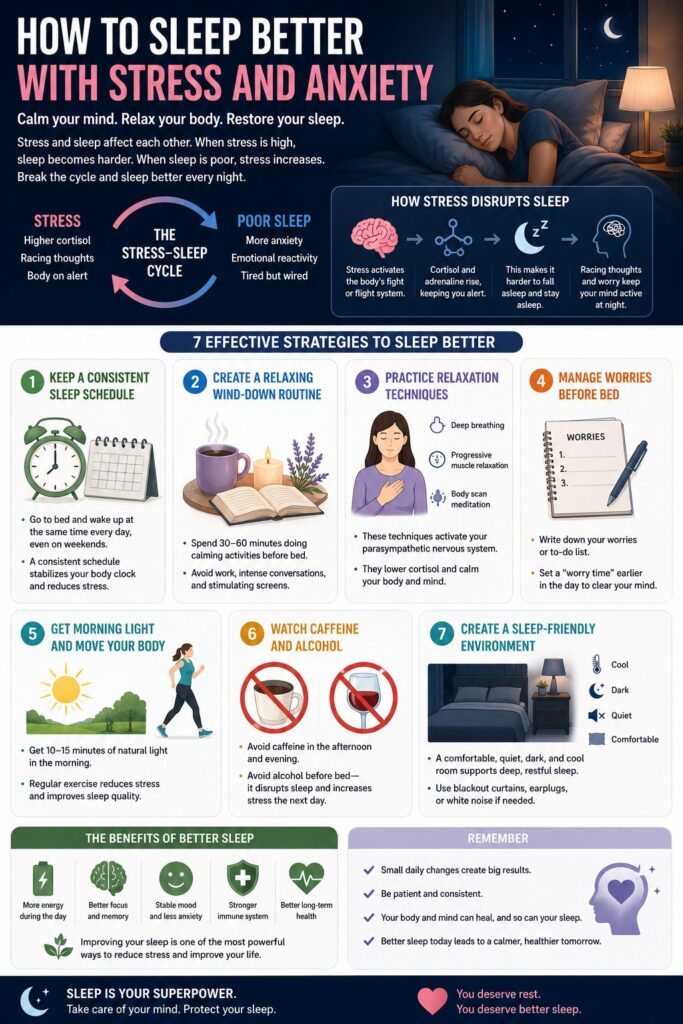
Stress and sleep have a deeply connected relationship. When stress increases, sleep becomes harder. When sleep quality declines, stress and anxiety often become worse. This creates a cycle that can quickly affect both mental and physical health.
The reason this cycle is so powerful is biological. Stress activates the nervous system and increases cortisol, adrenaline, and norepinephrine — chemicals designed to keep the body alert and prepared for danger. Sleep requires the opposite state: calmness, reduced alertness, lower heart rate, and nervous system relaxation.
Understanding how stress affects sleep and learning how to calm the body and mind before bed can dramatically improve sleep quality and reduce anxiety over time.
How Stress Disrupts Sleep
Falling asleep requires the nervous system to shift from an alert state into a relaxed parasympathetic state.
Stress prevents this transition.
When stress levels remain high, cortisol stays elevated into the evening. Heart rate increases, body temperature stays higher, and the brain continues operating in a state of alertness.
This makes it difficult to:
- Fall asleep
- Stay asleep
- Reach deep restorative sleep
- Get enough REM sleep
Stress also increases nighttime awakenings and racing thoughts, especially during the early morning hours.
Why Anxiety Feels Worse at Night
During the day, distractions and activity keep the brain occupied.
At night, the environment becomes quiet and the brain turns inward. Worries, unresolved problems, and anticipatory anxiety become more noticeable.
The brain’s problem-solving systems stay active instead of shutting down for sleep.
This creates the familiar experience of:
- Racing thoughts
- Overthinking
- Replaying conversations
- Catastrophizing future events
- Waking at 3 AM unable to return to sleep
The more emotionally important the stress feels, the harder it becomes for the brain to disengage.
- Keep a Consistent Sleep Schedule
One of the most powerful ways to improve stress-related sleep problems is maintaining a fixed wake time every day.
A stable wake time strengthens the circadian rhythm and stabilizes cortisol timing.
This helps the body naturally become sleepy at night even during stressful periods.
Sleeping in on weekends or varying sleep schedules weakens this system and makes stress-related insomnia worse.
Consistency matters more than perfection.
- Create a Relaxing Wind-Down Routine
The body needs time to transition from daytime alertness into nighttime recovery.
A structured wind-down routine helps signal to the brain that sleep is approaching.
Effective pre-sleep activities include:
- Reading a physical book
- Light stretching
- Warm showers or baths
- Deep breathing exercises
- Meditation
- Calm music
Avoid:
- Work tasks
- News consumption
- Social media arguments
- Intense conversations
- Bright screens
The goal is to reduce stimulation and activate the parasympathetic nervous system.
- Practice Deep Breathing and Relaxation Techniques
Stress creates shallow chest breathing, which keeps the nervous system activated.
Slow diaphragmatic breathing activates the vagus nerve and lowers physiological stress responses.
One effective method is the 4-7-8 technique:
- Inhale for 4 seconds
- Hold for 7 seconds
- Exhale slowly for 8 seconds
This lowers heart rate and reduces cortisol.
Progressive muscle relaxation is another effective technique.
This involves:
- Tensing muscle groups
- Holding briefly
- Releasing slowly
The contrast between tension and relaxation calms the body and reduces physical stress.
- Write Down Your Worries Before Bed
Journaling before bed helps remove stress from working memory.
Writing worries down creates psychological closure and reduces mental rumination.
Research shows that creating a simple to-do list before bed can reduce the time it takes to fall asleep.
A useful strategy is scheduling a “worry period” earlier in the evening.
Spend 15 to 20 minutes:
- Reviewing concerns
- Planning solutions
- Writing tasks down
This prevents worries from dominating bedtime.
- Get Morning Sunlight
Morning light exposure helps reset the circadian rhythm and regulate cortisol properly.
Natural sunlight in the first hour after waking:
- Improves daytime alertness
- Helps cortisol peak at the correct time
- Supports melatonin production later at night
- Improves sleep onset
Even 10 to 15 minutes of outdoor light exposure can make a meaningful difference.
Morning walks are especially effective because they combine movement and sunlight.
- Exercise Regularly
Exercise is one of the best long-term tools for both stress reduction and sleep improvement.
Regular exercise:
- Reduces baseline cortisol
- Improves deep sleep
- Lowers anxiety
- Increases emotional resilience
- Helps regulate mood
Moderate exercise consistently improves sleep quality.
Morning or afternoon exercise tends to work best for stress-related sleep problems.
Very intense workouts close to bedtime may temporarily increase alertness in sensitive individuals.
- Reduce Caffeine and Alcohol
Both caffeine and alcohol worsen the stress-sleep cycle.
Caffeine increases cortisol and nervous system stimulation.
Afternoon or evening caffeine often keeps the brain more alert than people realize.
Alcohol may help people fall asleep faster, but it disrupts REM sleep and increases nighttime awakenings.
Reducing both substances — especially in the evening — significantly improves sleep quality over time.
Create a Sleep-Friendly Environment
A calm sleep environment helps reduce stress-related arousal.
Helpful changes include:
- Keeping the bedroom cool
- Reducing noise
- Using blackout curtains
- Limiting screen exposure before bed
- Using comfortable bedding
The brain associates environments with emotional states.
A quiet, dark, relaxing room strengthens the brain’s association between the bedroom and sleep.
When to Seek Professional Help
Occasional stress-related sleep problems are common.
However, professional support may be necessary if:
- Insomnia lasts for weeks or months
- Anxiety becomes overwhelming
- Panic attacks occur
- Sleep deprivation affects daily functioning
- Depression symptoms appear
Cognitive Behavioral Therapy for Insomnia (CBT-I) is one of the most effective evidence-based treatments for chronic insomnia and stress-related sleep problems.
Conclusion
Stress and anxiety directly affect sleep through biological and neurological mechanisms.
Poor sleep then increases emotional reactivity, anxiety, and stress sensitivity — creating a cycle that can become difficult to escape without deliberate intervention.
The good news is that small, consistent habits can gradually calm the nervous system and improve both sleep quality and emotional resilience.
Better sleep is not simply about resting more. It is about giving the brain and body the conditions they need to recover, regulate emotions, and function properly.
When sleep improves, stress becomes easier to manage. And when stress becomes easier to manage, sleep improves naturally in return.