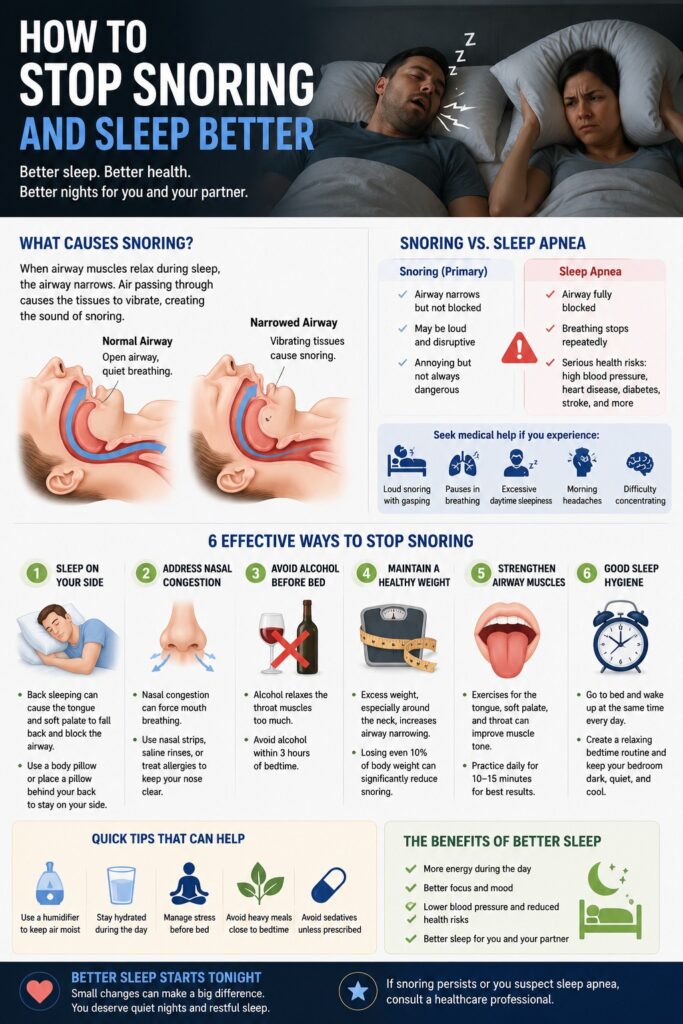
How to Stop Snoring and Sleep Better
Introduction
Snoring is one of the most common sleep-related problems in the world. It affects not only the person snoring but also anyone sharing the same sleeping space.
Many people think snoring is harmless, but frequent snoring can seriously reduce sleep quality and may even indicate a more serious condition like sleep apnea.
Understanding why snoring happens and how to reduce it can improve sleep quality, energy levels, and overall health.
What Causes Snoring
Snoring happens when airflow is partially blocked during sleep.
As air moves through a narrowed airway, the surrounding tissues vibrate and create the sound of snoring.
This narrowing is usually caused by relaxed throat muscles, tongue position, nasal congestion, or excess tissue around the airway.
Why Snoring Affects Sleep Quality
Snoring does not just disturb other people. It also affects the snorer’s own sleep quality.
Frequent airway narrowing causes brief awakenings during the night, even if they are not remembered in the morning.
These interruptions reduce deep sleep and REM sleep, leading to fatigue and poor recovery.
Snoring vs Sleep Apnea
Not all snoring is dangerous, but some cases may be linked to sleep apnea.
Sleep apnea occurs when breathing repeatedly stops during sleep because the airway collapses completely.
Warning signs include:
- Loud snoring
- Gasping or choking during sleep
- Extreme daytime fatigue
- Morning headaches
- Difficulty concentrating
People with these symptoms should seek medical evaluation.
- Sleep on Your Side
Sleeping on your back increases snoring because gravity pulls the tongue and soft tissues backward into the airway.
Side sleeping helps keep the airway open and reduces snoring for many people.
Using a body pillow or placing a pillow behind your back can help maintain side sleeping.
- Reduce Nasal Congestion
Blocked nasal passages force mouth breathing, which increases snoring.
Allergies, colds, and dry air can contribute to congestion.
Nasal strips, saline rinses, and humidifiers may improve airflow and reduce snoring.
- Avoid Alcohol Before Bed
Alcohol relaxes the muscles of the throat and increases airway collapse during sleep.
This makes snoring worse and increases the risk of sleep apnea symptoms.
Avoiding alcohol within several hours of bedtime can improve sleep quality significantly.
- Maintain a Healthy Weight
Excess body weight, especially around the neck, increases pressure on the airway.
Weight loss can reduce airway narrowing and improve breathing during sleep.
Even moderate weight loss may reduce snoring intensity.
- Strengthen Airway Muscles
Exercises that strengthen the tongue and throat muscles can reduce snoring over time.
Simple mouth and tongue exercises practiced consistently may improve muscle tone and airway stability during sleep.
- Improve Sleep Habits
Poor sleep habits can worsen snoring.
Sleep deprivation increases muscle relaxation during sleep, which increases airway collapse.
Maintaining a regular sleep schedule and creating a healthy sleep environment can help reduce snoring.
When to Seek Professional Help
If snoring is severe or accompanied by pauses in breathing, excessive fatigue, or morning headaches, professional evaluation is important.
Sleep apnea requires proper diagnosis and treatment.
Conclusion
Snoring is common, but it should not be ignored.
It affects sleep quality, energy levels, and overall health.
Fortunately, many cases improve with simple lifestyle changes like side sleeping, reducing alcohol, improving nasal airflow, and maintaining a healthy weight.
Better breathing during sleep leads to deeper rest and better mornings for both you and your partner.