Introduction
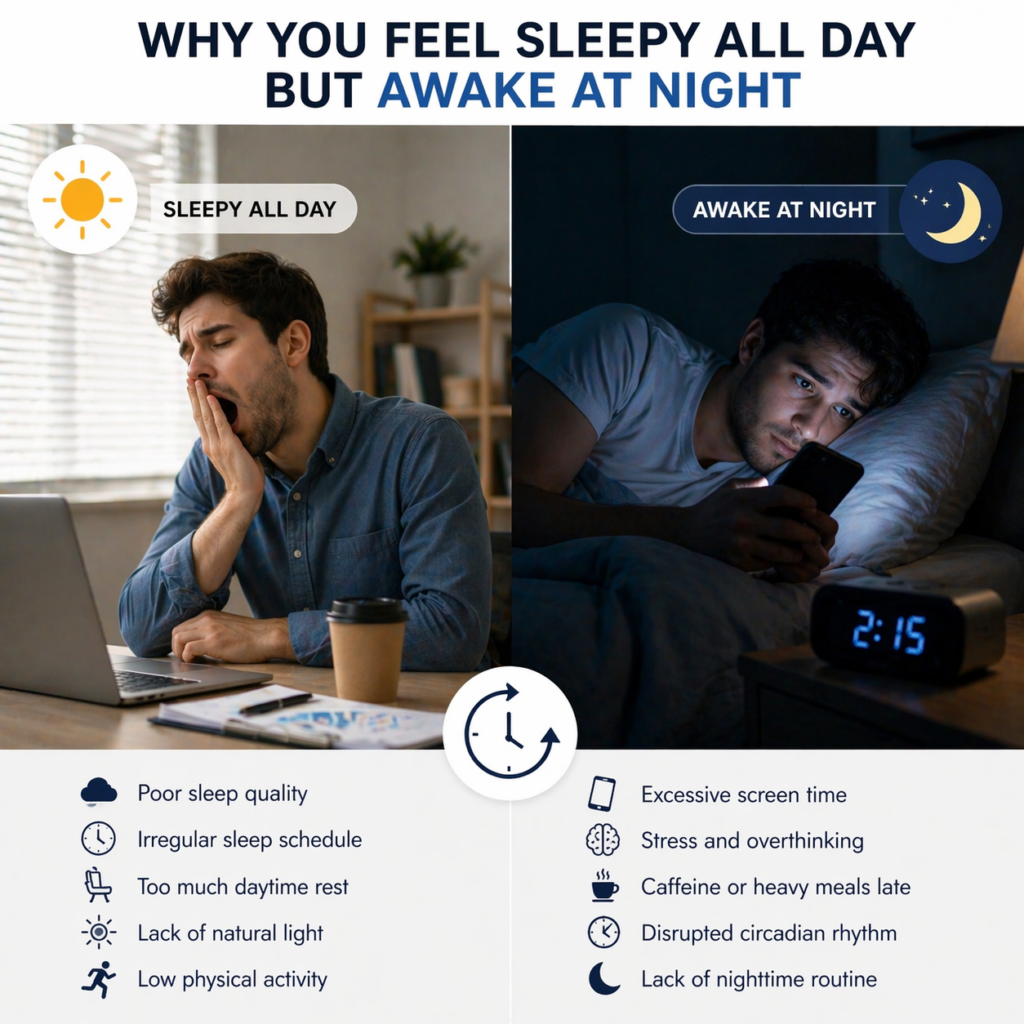
Feeling sleepy all day but suddenly wide awake at night is one of the most frustrating sleep problems.
You struggle to stay focused during the day, feel low on energy, and can barely keep your eyes open. But when it is finally time to sleep, your body seems to switch on instead of shutting down.
This situation can feel confusing, but it is actually a common issue. In most cases, it is caused by a mismatch between your body’s internal clock and your daily habits.
Understanding why this happens is the first step toward fixing it.
Your Internal Clock Is Out of Sync
Your body runs on a 24-hour cycle called the circadian rhythm.
This system controls when you feel alert and when you feel sleepy. It responds to light, activity, and daily routines.
When your schedule is irregular, your internal clock becomes confused.
This can cause you to feel tired during the day and alert at night.
Fixing your schedule is key to solving this problem.
Irregular Sleep Patterns
Going to bed and waking up at different times every day disrupts your rhythm.
Sleeping in on weekends, staying up late, or taking long naps can all shift your schedule.
These changes may seem small, but they have a big impact over time.
Your body needs consistency to function properly.
Too Much Daytime Rest
Napping too much during the day can reduce sleep pressure.
Sleep pressure is the natural drive your body builds to help you fall asleep at night.
If you nap too long or too late, your body may not feel ready for sleep later.
This leads to staying awake at night.
Keeping naps short or avoiding them can help.
Lack of Morning Light
Light is one of the strongest signals for your body.
If you do not get enough light in the morning, your internal clock may shift later.
This can make you feel sleepy during the day and awake at night.
Getting natural light early in the day helps reset your rhythm.
Even a short walk outside can make a difference.
Screen Use at Night
Using your phone or computer at night keeps your brain active.
The light from screens delays melatonin production.
This makes it harder for your body to feel sleepy.
Reducing screen use before bed can help your body relax.
Low Physical Activity
A lack of movement during the day reduces sleep pressure.
Your body needs activity to feel ready for rest.
Without enough movement, you may not feel sleepy at night.
Even light exercise can improve your sleep.
Stress and Mental Stimulation
Stress can keep your mind active at night.
Even if you are physically tired, your brain may remain alert.
This prevents your body from relaxing.
Managing stress is important for better sleep.
How to Fix the Problem
You do not need complicated solutions.
Start by waking up at the same time every day.
Get natural light in the morning.
Reduce naps and limit screen use at night.
Move your body during the day.
These simple changes can improve your sleep pattern.
What to Expect
Your body will need time to adjust.
You may not see immediate results.
However, most people notice improvement within one to two weeks.
Consistency is key.
Conclusion
Feeling sleepy during the day but awake at night is a common problem.
It is usually caused by an out-of-sync internal clock and daily habits.
By making simple changes, you can reset your rhythm and improve your sleep.
Better sleep leads to better energy and better days.