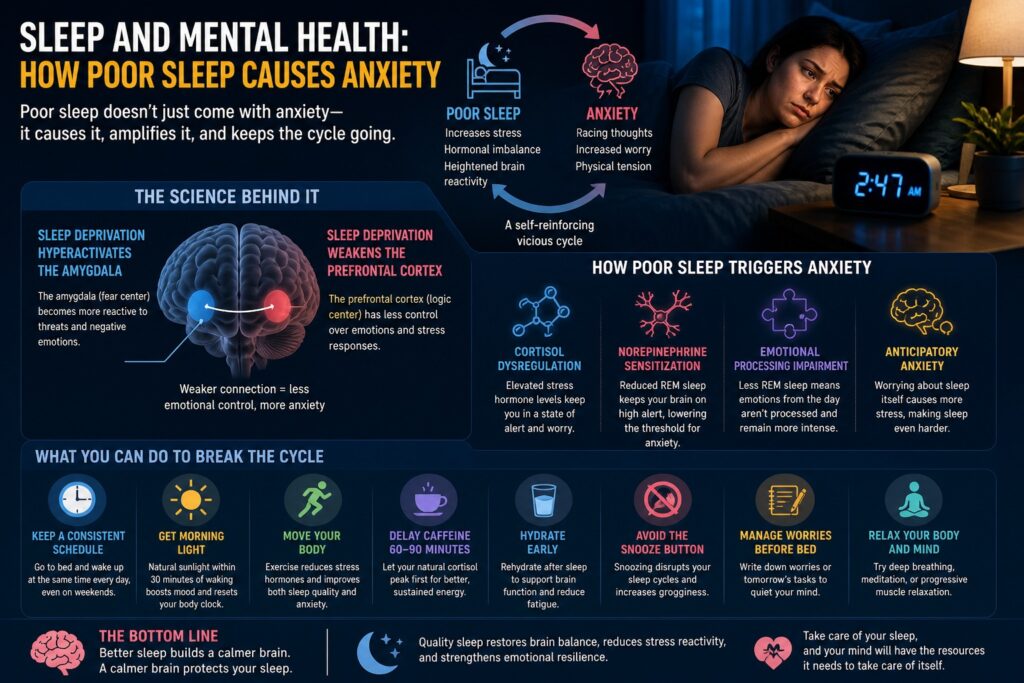
Sleep and Mental Health: How Poor Sleep Causes Anxiety
Introduction
Anxiety and poor sleep are closely connected. Most people understand that anxiety can make it difficult to sleep, but fewer realize that poor sleep can also directly cause anxiety.
Sleep deprivation changes how the brain processes emotions, stress, and perceived threats. Over time, poor sleep increases emotional sensitivity, stress reactivity, and anxious thinking patterns.
Understanding how sleep affects mental health is one of the most important steps in improving both anxiety and sleep quality.
The Neuroscience of Sleep and Anxiety
Two major brain regions are involved in anxiety: the amygdala and the prefrontal cortex.
The amygdala is responsible for detecting threats and generating emotional responses such as fear and anxiety.
The prefrontal cortex helps regulate these emotional reactions and keeps them balanced.
In a well-rested brain, the prefrontal cortex helps calm the amygdala.
When sleep is insufficient, this connection weakens. The amygdala becomes more reactive while the brain’s ability to regulate emotions decreases.
This creates a state of heightened anxiety and emotional instability.
How Sleep Deprivation Increases Anxiety
Poor sleep affects several important biological systems linked to anxiety.
Cortisol, the body’s primary stress hormone, becomes elevated when sleep is disrupted.
High cortisol levels keep the body in a state of alertness and stress.
Sleep deprivation also disrupts norepinephrine regulation, increasing the brain’s sensitivity to stress and perceived threats.
As a result, even small problems may feel overwhelming after poor sleep.
REM Sleep and Emotional Processing
REM sleep is essential for emotional recovery.
During REM sleep, the brain processes emotional experiences from the day and reduces their emotional intensity.
This process helps build emotional resilience.
When REM sleep is reduced, emotional processing becomes incomplete.
This can lead to increased worry, irritability, and emotional sensitivity.
People who consistently get poor REM sleep often report feeling more anxious and emotionally overwhelmed.
The Sleep-Anxiety Cycle
Sleep and anxiety reinforce each other.
Anxiety makes it harder to sleep.
Poor sleep then increases anxiety the next day.
This creates a self-reinforcing cycle that can continue indefinitely without intervention.
Breaking this cycle requires improving both sleep quality and anxiety management at the same time.
How Anxiety Disrupts Sleep
Anxiety increases mental and physical arousal.
Racing thoughts, elevated heart rate, and stress hormones all interfere with the ability to fall asleep and stay asleep.
Many people also develop anxiety specifically about sleep itself, worrying about whether they will sleep enough.
This creates additional pressure and makes sleep even more difficult.
Sleep Disorders and Anxiety
Chronic sleep problems are strongly linked to anxiety disorders.
People with insomnia are more likely to develop anxiety over time.
Sleep apnea and fragmented sleep can also worsen anxiety symptoms.
Improving sleep quality often reduces anxiety severity significantly.
Practical Strategies to Improve Sleep and Reduce Anxiety
Several habits can improve both sleep and anxiety levels.
Maintain a consistent sleep schedule.
Reduce caffeine intake, especially in the afternoon.
Limit alcohol before bed.
Use breathing exercises or relaxation techniques at night.
Get regular exercise during the day.
Reduce screen exposure before bedtime.
These strategies help calm the nervous system and improve sleep quality.
The Importance of Consistency
Consistency is critical for recovery.
A stable sleep routine helps regulate stress hormones and supports emotional balance.
Small improvements practiced regularly can lead to major long-term benefits.
When to Seek Professional Help
If anxiety or sleep problems become severe or persistent, professional support may be necessary.
Cognitive behavioral therapy for insomnia and anxiety can be highly effective.
Addressing both conditions together usually produces the best results.
Conclusion
Poor sleep does not just happen alongside anxiety. It actively contributes to it.
Sleep deprivation changes the brain in ways that increase emotional reactivity and reduce stress tolerance.
Improving sleep quality helps restore emotional balance and supports better mental health.
Better sleep creates a calmer, more resilient mind.